[ad_1]
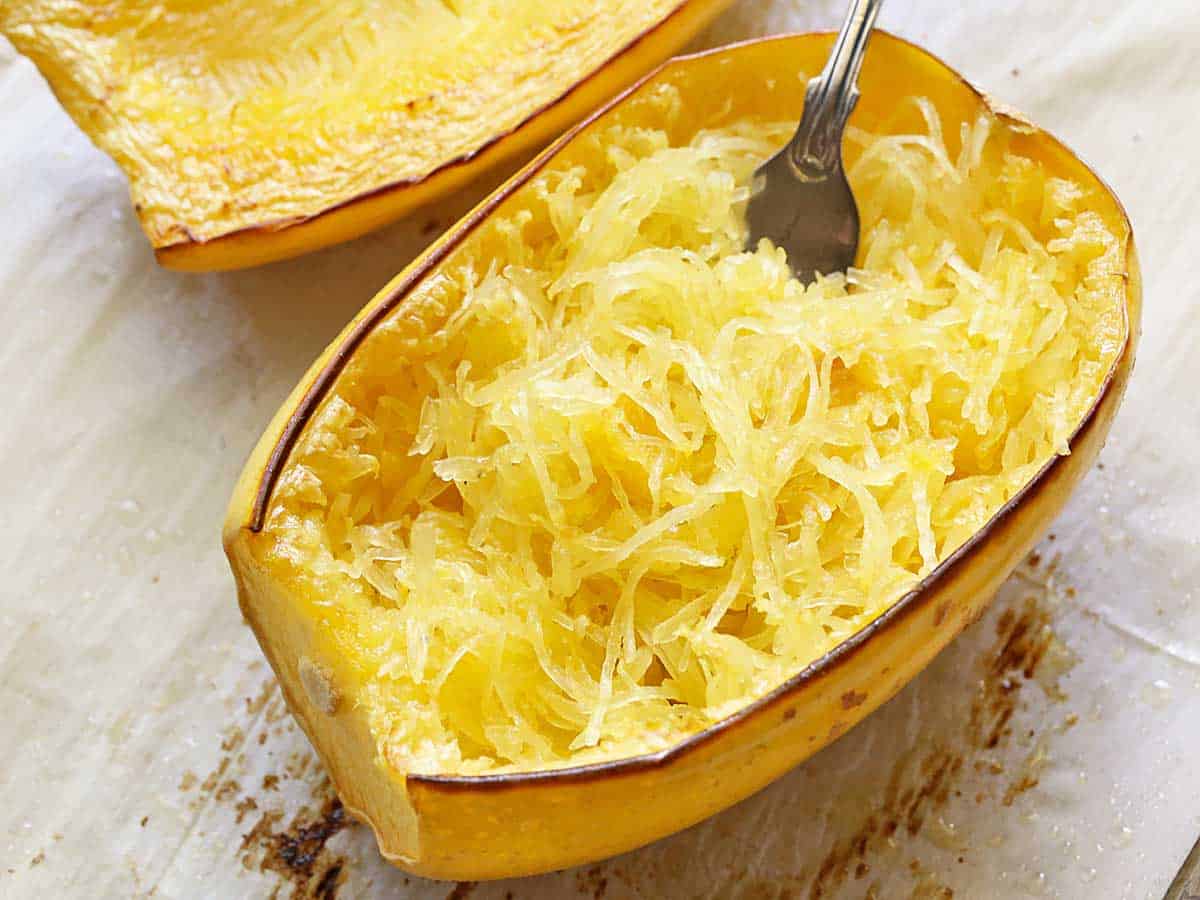
It’s easy to bake spaghetti squash in the oven, and you can then use those beautiful golden strands in countless tasty recipes. While there are other methods for cooking this squash, oven-baking yields the best results in terms of texture and flavor.
I used to be a pasta lover. 🍝 Back in the day, inhaling a plateful of spaghetti was a weekly occurrence. Fast forward a few years, middle age hits, and one suddenly realizes they can’t be twenty-three forever. At least, their body can’t.
That’s why I’m so grateful for dishes like oven-baked spaghetti squash, zucchini noodles, and spinach lasagna. They definitely fill a void, proving time and time again that the flavors we associate with pasta, lasagna, or even pizza, mostly come from the toppings, not necessarily from the starchy base.
Jump to:
The perfect noodle substitute
I love all squashes, summer as well as winter varieties. Roasted butternut squash, for example, is wonderful, and so is mashed pumpkin.
Winter squashes are the perfect cold-weather side dish – they are hearty, flavorful, and very filling. And when you season them right and roast them, or mash them with cream and butter, you no longer need to mourn your inability to eat potatoes.
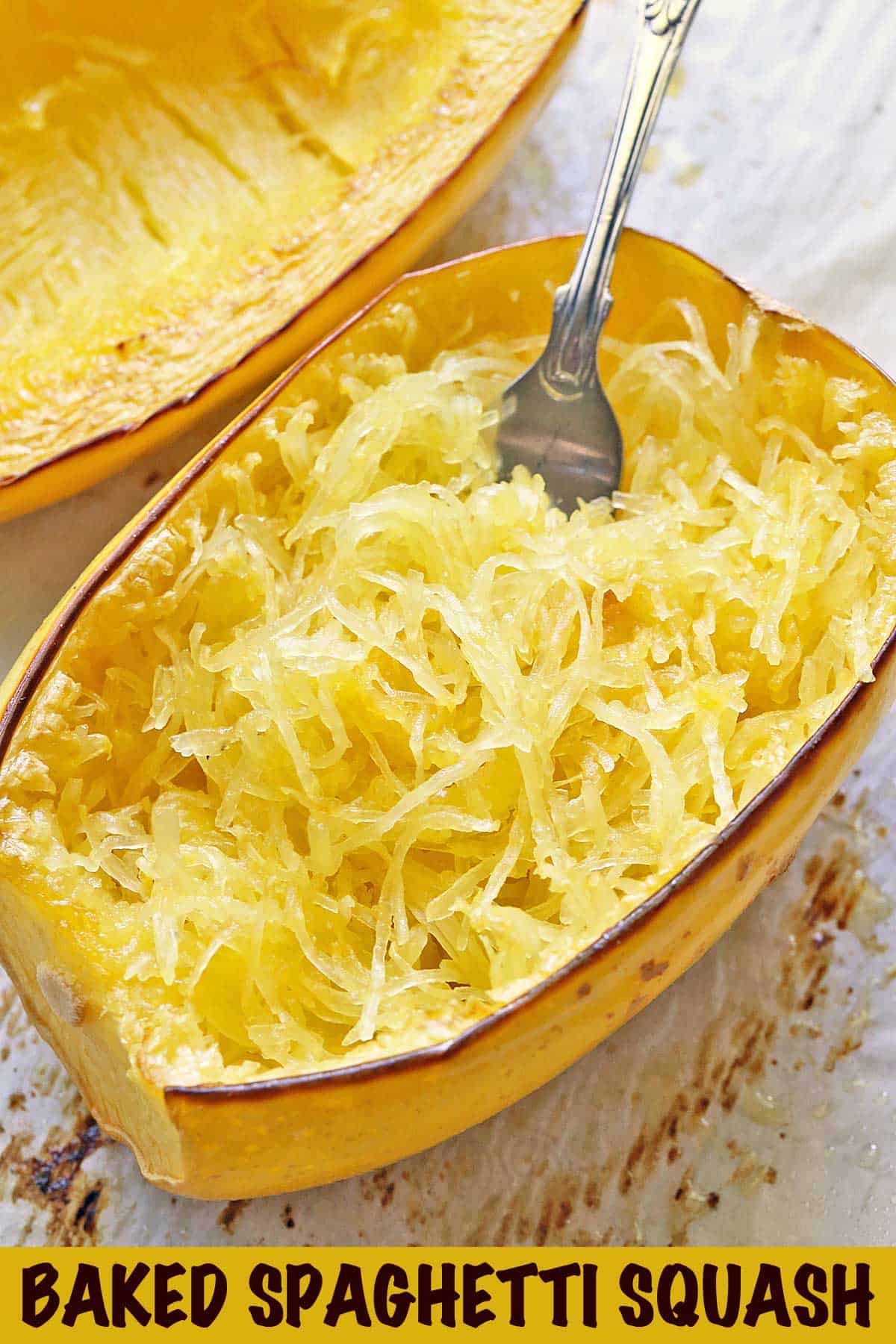
As much as I love all squashes, there’s something extra special about spaghetti squash. The way you can run a fork through its cooked flesh and create long, golden noodle-like strands – it’s magic! It’s truly one of the most fun squashes to eat, so I make it quite often.
How to cook spaghetti squash
There are several ways you can cook this magical squash. All of them work well, and each of them has its advantages and its drawbacks.
1. Microwave. You can microwave spaghetti squash. This is probably the easiest method because it saves you from the unpleasant (and somewhat risky) task of cutting the raw squash. You simply pierce it with a fork, then microwave it whole until it’s fork-tender. The drawback of this method is that the strands it produces tend to be on the mushy side.
2. Bake it in a water bath. In this method, you cut the squash, then place the halves, cut side down, in a rimmed 9 X 13 baking dish. Add enough water to come ½ inch up the sides of the baking dish. Cover with foil and bake until tender, about 45 minutes. This method produces a reliably tender, uniformly cooked squash.
3. Oven-bake. This brings me to the method outlined here, of baking the squash directly on a baking sheet. For this method, you cut the squash, then place it cut side down on greased parchment paper (or you can lightly grease the squash itself). As before, bake until tender, about 40 minutes in a 425°F oven.
The third method yields the best texture. The squash comes out perfectly cooked, golden brown and fragrant, and when its flesh is raked back and forth with a fork, the strands are just right – soft but not mushy.

How to cut a spaghetti squash
The need to cut it prior to baking is exactly why I often choose the microwave method, which saves me from cutting it raw. It’s not easy to cut squashes – their skin is thick and hard. You need to be very careful when doing it.
One trick I have learned over the years is to microwave the squash for just a minute or two, depending on its size. This ever so slightly softens the skin, making the task of cutting it less onerous.
Once you’ve slightly softened the skin, but without actually cooking the squash, place it on a sturdy cutting board, and work very carefully. First, using a large, freshly sharpened knife, slice off the stem end of the squash. Then stand the squash upright on that flat end and carefully use the knife to slice it in half lengthwise.
Phew! That was the difficult part, but you’re still left with the slightly annoying task of removing the pulp and seeds – do that with a large metal spoon, as shown in the video below.
FAQ
The best way to prevent it from being soggy is to bake it in the oven. If you bake it for just the right amount of time, as explained in the recipe card below, you’ll get perfect strands – tender but not overcooked. It’s kind of like pasta – you want it al-dente, so timing is the secret. Just like overcooked pasta, overcooked spaghetti squash is mushy.
If you can pierce the flesh easily with a fork, it’s done and should be immediately removed from the oven. The recipe below suggests baking it for 40 minutes, but it’s a good idea to start checking after 30 minutes to ensure it won’t be overcooked.
Yes, absolutely. Although the strands won’t be as perfect as when they first emerge out of the oven, you can reheat them, either in the microwave or in a low oven. In fact, if your squash ended up mushy, spreading the strands evenly on a baking sheet and reheating them in a 300F oven is a good way to improve their texture.
You can simply enjoy the squash as is – and if that’s what you plan on doing, you might want to brush it with melted butter and sprinkle it with salt and pepper prior to baking.
As for recipes that use those gorgeous strands, here are a few ideas for you. I love all of them and make them regularly, but my favorite is probably the noodles – they really do give you an experience very similar to eating garlicky pasta.
Storing leftovers
Like most cooked leftovers, you can keep the cooked strands in the fridge, in an airtight container, for 3-4 days. They keep quite well and also reheat well – if you’re not going to use them in another recipe, you can simply reheat them in the microwave.
I typically publish a new recipe once a week. Want the new recipes in your inbox? Subscribe! You can also follow me on Pinterest, Facebook, YouTube, Instagram, or Twitter. ❤️
Recipe card
Oven-Baked Spaghetti Squash
It’s easy to bake spaghetti squash in the oven, and the beautiful golden strands can then be used in many tasty recipes.
Servings: 4 servings
Calories: 61kcal
INSTRUCTIONS
-
Preheat your oven to 425 degrees F. Line a rimmed baking dish with parchment paper.
-
Pierce the squash in a few places with a fork and microwave it for 1 minute, to slightly soften.
-
Using a large, sharp knife, cut the squash in half lengthwise. Place it on a sturdy cutting board, and work very carefully. First slice off the stem end of the squash, then stand the squash upright on this flat end and carefully use your knife to slice it in half.
-
Using a large metal spoon, remove the seeds and pulp.
-
Lightly spray the cut side with olive oil and, if you wish, sprinkle with salt and pepper.
-
Place the squash halves, cut side down, in the prepared baking dish. Bake until fork-tender, about 40 minutes.
-
Transfer the cooked spaghetti squash to a cutting board and allow it to cool until easier to handle, about 10 minutes.
-
Rake a fork back and forth across the squash to remove its flesh in strands, transferring the strands to a bowl.
NOTES
Serving: 1cup | Calories: 61kcal | Carbohydrates: 10g | Protein: 1g | Fat: 3g | Sodium: 183mg | Fiber: 2g | Sugar: 4g


[ad_2]
Source link